Skip to content
Tampa Commercial Roofing Co

Serving Tampa and nearby areas

Ponding Water on a Flat Roof in Tampa, FL

Ponding water on a flat roof in Tampa means the roof is not draining the way it should, and a free inspection shows whether it is a clogged drain, a low spot or a bigger problem.

Book a free roof inspection

A few quick answers. A local roofing specialist calls you back the same business day.

Local to Tampa

We connect property owners in Tampa and nearby areas, including Downtown Tampa, Westshore, East Tampa, Brandon, Riverview and Plant City, with one independent local commercial roofing specialist.

  • Lots of water, fast

    Tampa averages 49.48 inches of rain a year, with about 30 inches from June through September, according to the National Weather Service. A flat roof has to move that water off in minutes.

  • Florida code expects drainage

    The Florida Roofing and Sheet Metal Contractors Association notes that the Florida Building Code defines positive roof drainage as water draining off within 48 hours of rain, and calls for overflow drains or scuppers where water could be trapped.

What it costs

Typical published ranges for Tampa. The contractor's written estimate is the price, and the inspection is free.

WorkTypical range
Ponding inspection and written estimate in TampaScheduled the day you call Free
Fixing a ponding area $70 to $750per repair
Drain repair $70 to $500per repair
Seam repair in a ponding area $200 to $1,000per repair

See typical commercial roofing prices in Tampa

A puddle that will not go away

Every flat roof holds a little water right after a storm. That is normal. The question is how long it stays. The roofing industry's common test is 48 hours. If water is still sitting on the roof two days after the rain stopped, in weather that should dry it, that is called ponding.

Ponding is not a leak yet. But it is often where the next leak starts. The longer water sits, the more it wears on the roof surface and the more chances it has to find a weak seam.

What you will notice

The same puddle in the same place

After every storm.

Dirt rings or dark stains

On the roof where water sat and dried.

Algae, moss or plants

Growing in one area of the roof.

Gravel or coating washed away

In a circle, leaving bare membrane.

A drain sitting higher than the water

Around it, so the water never reaches it.

Leaks inside below the low spot,

Often after a few weeks of storms.

A sag in the ceiling or deck

Below a wide pond. This one is urgent.

Why water ponds on Tampa roofs

Clogged drains. Leaves, palm fronds, bird nests and storm debris collect at drains and scuppers. In a Tampa summer, one blocked drain can leave a pond after almost every afternoon storm.

Low spots in the roof. Insulation can get crushed by foot traffic, heavy equipment or wet areas underneath. The roof dips, and water collects in the dip. Spots around rooftop AC units are common, since service techs walk there most.

Not enough slope. Industry groups treat a quarter inch of fall per foot as the minimum for a low-slope roof to drain well. Some older roofs were built with less. Water drains slowly or not at all in parts of the roof.

The structure has moved. On older buildings the deck or joists can sag over time. Water sits in the sag, adds weight, and makes the sag deeper.

A lot of rain at once. Tampa averages 49.48 inches of rain a year, with about 30 inches from June through September, according to the National Weather Service. Summer storms drop water faster than many small drains can handle.
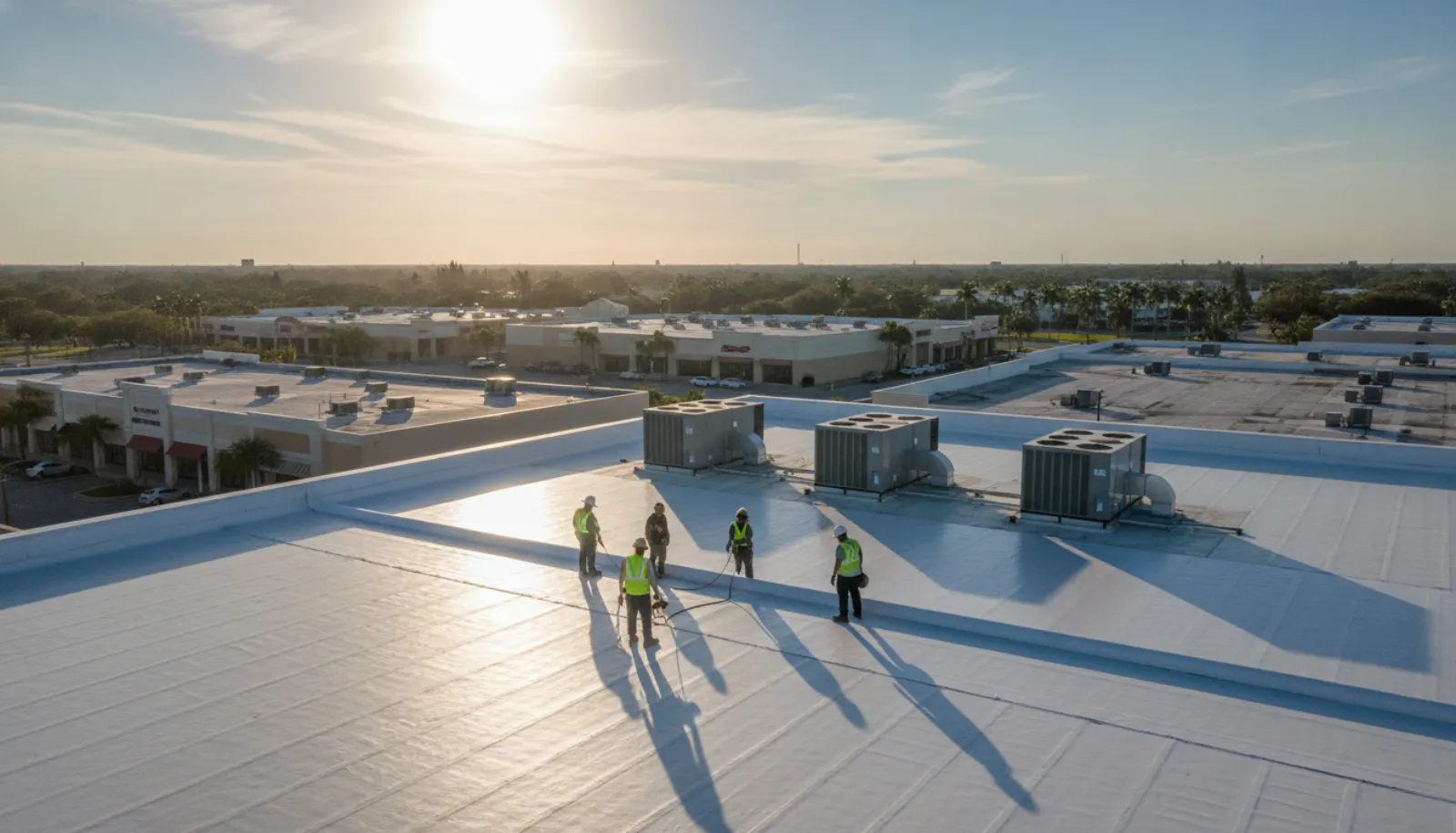
Why it matters

Weight. Every inch of water weighs about 5.2 pounds per square foot. A pond 20 feet by 20 feet and one inch deep weighs about a ton. Deeper ponds weigh more.

Wear. Standing water breaks down roof surfaces faster. On a hot Tampa roof, water also heats up and cools down every day, which is hard on seams.

Leaks. A seam that would be fine under a quick rain can fail when it sits under water for days.

Your warranty. The Florida Roofing and Sheet Metal Contractors Association notes that many commercial roof warranties require positive drainage, and some leave out damage caused by ponding.

Florida code. The same group notes that the Florida Building Code defines positive roof drainage as water draining off within 48 hours, and calls for overflow drains or scuppers where water could be trapped.

When it is minor and when it is urgent

A small puddle, a few inches deep at most, that dries in three or four days is a maintenance item. Clear the drains and have it checked at the next visit.

Call right away if the pond is wide and deep, if it keeps growing, if you see a sag in the deck from inside, or if water is leaking below it. Keep people out of the area under a sagging roof.

How ponding gets fixed

The fix depends on the cause, and the inspector finds the cause first.

  1. Clear and repair the drains. Often this alone solves it. Strainers keep debris out.
  2. Build up the low spot. Extra tapered insulation or a small raised section called a cricket sends water toward the drain.
  3. Add a drain or scupper. Used when part of the roof has no good way out.
  4. Fix wet or crushed insulation under the pond so the roof is flat again.
  5. Re-slope during a new roof. If the roof is due for replacement anyway, tapered insulation can fix the slope for the whole roof.

Published cost guides put fixing a ponding area at about $70 to $750 and drain repair at about $70 to $500. Re-sloping a whole roof is priced as part of a new roof. Your written estimate gives the real number.

What to do before the inspection

Take photos

Of the pond the day after rain and again two days later. Mark the date on each.

Check the drains

From a safe spot if you have roof access, and note any you can see are blocked.

Look inside below the pond

For stains or sagging.

Keep weight off the roof

Do not store equipment or materials in that area.

Find your warranty

And look for drainage terms.

Call (656) 233-6113 to schedule a free ponding inspection and a written estimate with Tampa Commercial Roofing Co.

Frequently asked questions

How long can water sit on a flat roof before it is a problem?

The roofing industry's common test is 48 hours. Water still on the roof two days after a rain, in weather good for drying, is called ponding. Water that dries sooner is usually fine.

Does ponding water void my roof warranty?

It can. Many commercial roof warranties require the roof to drain and leave out damage caused by ponding. Check the drainage terms in your warranty, or have the inspector read them with you.

Can ponding water make a roof collapse?

Each inch of water weighs about 5.2 pounds per square foot. A small puddle is not a danger, but deep, wide ponds add real weight, and the extra weight can make the roof sag and hold even more water. Call right away if you see the deck sagging inside.

Can the contractor just add a drain?

Sometimes. A new drain or scupper can help when one area has no way out. Often the fix is simpler, like clearing a clogged drain, or building up the low spot so water flows to the drain that is already there.

Why is there water on my roof when it has not rained?

In Tampa, it may still be from the last storm. It can also come from a rooftop AC unit's condensate line draining onto the roof. Both are worth a look.

(656) 233-6113 Free inspection